
Contact Us
Our team is ready to support you with timely, thoughtful service. Fill out the form and we’ll get back to you as soon as possible
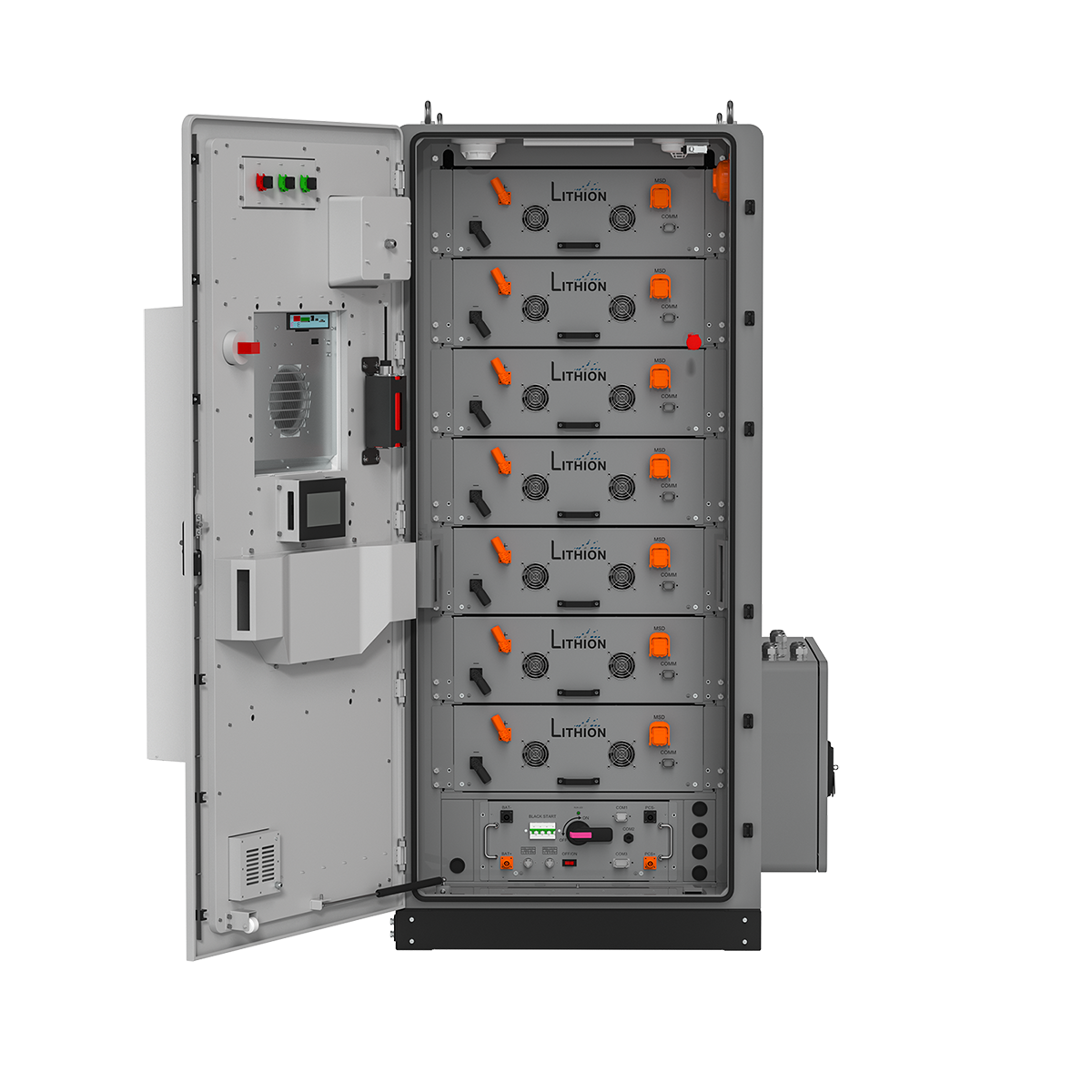

Peak shaving battery storage is a way for businesses to reduce the electricity they’re drawing from the grid during high-demand periods. Storing energy when demand is lower and releasing it when needed helps battery systems manage peak loads, control electricity costs, and make the best use of electrical infrastructure.
For industrial and commercial organizations that use energy-intensive equipment, managing peak demand periods can be a vital aspect of their electrification strategies. However, achieving the right results is about balancing battery capacity, power requirements, charging schedules, and site-specific operating needs, as the Lithion Solutions team explains here.
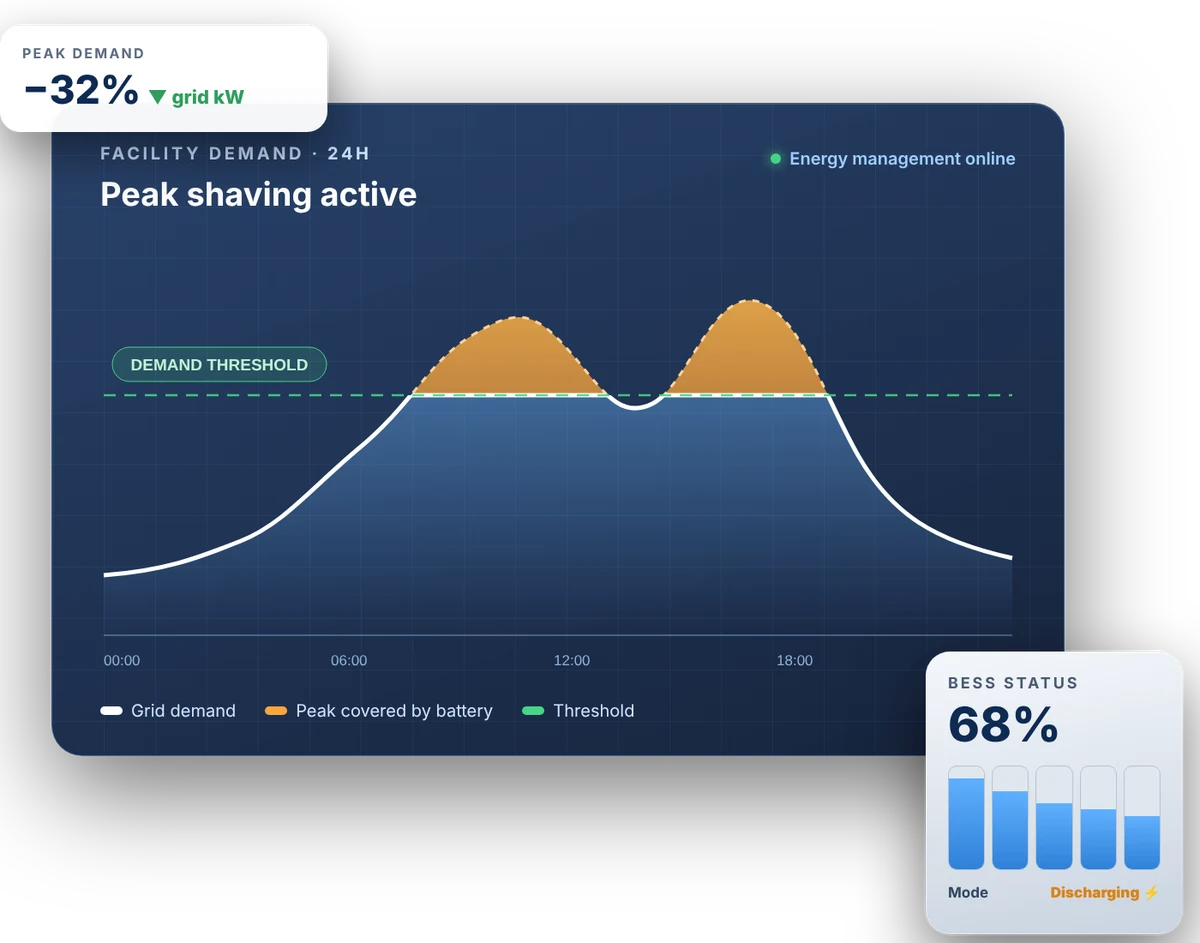
Peak shaving is an energy management technique that reduces the maximum power a facility draws from the grid at any point in time. In the real world, electricity demand fluctuates during the day because several machines or charging stations might be in use simultaneously, creating periods when electricity consumption spikes.
Depending on the relevant electricity tariffs, those demand peaks can also contribute to higher energy costs. Peak shaving battery storage is a way to address this by extracting some of the power needed from a battery, rather than drawing the full amount from the grid.
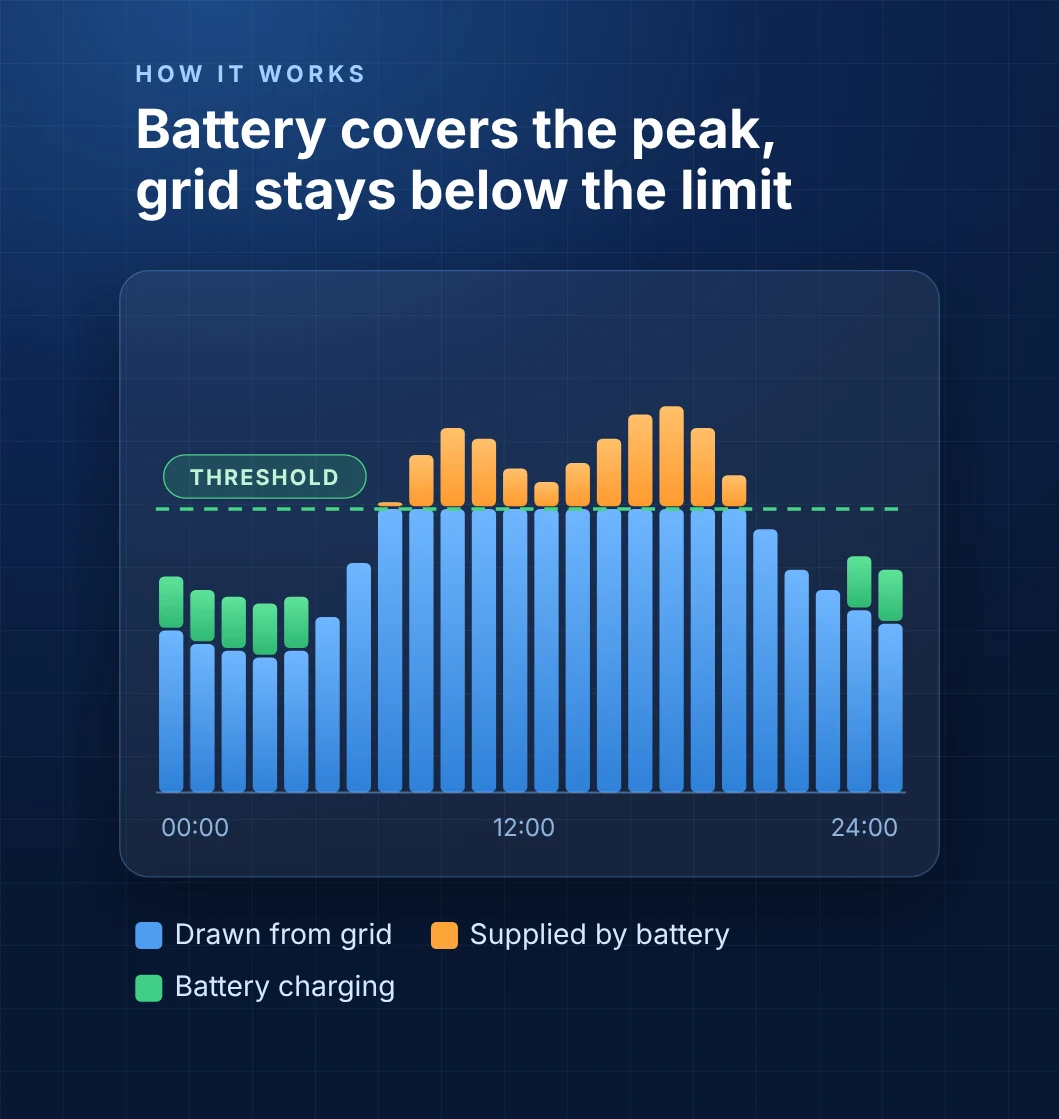
In practice, batteries can be charged when demand is lower, or energy is readily available, storing that energy until demand increases. One of the important points to note is that peak shaving doesn’t necessarily reduce the total electricity a business uses but helps manage when electricity is drawn from the grid and can limit the maximum demand placed on an electrical supply.
Peak shaving only works when there is a method of storing power, such as having a battery energy storage system (BESS). Provided this is integrated with energy management controls and power conversion equipment, it can respond to changes in electricity demand. Typically, peak shaving involves these three stages:
The battery stores energy when site demand is lower, or when prices are lower.
An energy management system tracks consumption and identifies when demand is approaching a specific threshold.
The battery provides power for the facility, reducing the amount drawn from the grid during a demand peak.
While peak shaving is an established approach, it’s essential to ensure that any strategies consider the battery’s total available energy, discharge power, and response capabilities, alongside the average durations of peak periods.
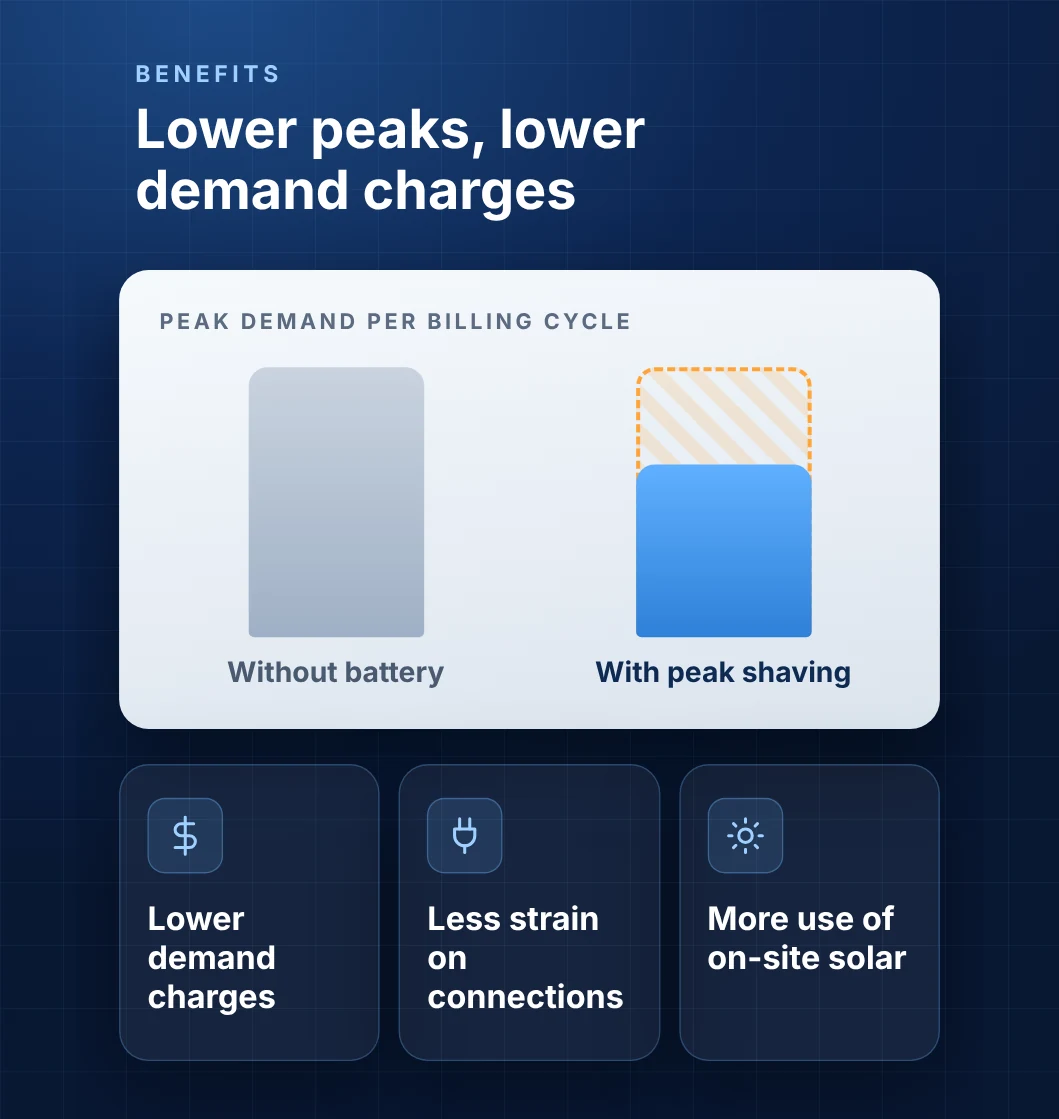
The primary advantages are for organizations with high or fluctuating electricity demand and can include the following:
Peak shaving can also be helpful for businesses undergoing electrification processes. As they introduce electric vehicles and equipment, overall electricity demand is likely to increase. This means battery storage can be useful in managing those additional loads and supporting flexible access to energy as the project progresses.
Selecting a battery system isn’t simply about calculating the facility’s energy consumption, because our engineers will look at each site’s power requirements and how long demand peaks last. Some of the aspects involved in the design process include:
Determines how much power a battery might need to deliver at any given point in time
Influences how long a battery can support the required load
Identifies when peaks happen, how often, and for how long
Helps establish when a battery can recharge between demand peaks
Indicates how a battery can be integrated with existing power supply and equipment
Will affect the design of the battery enclosure, thermal management safeguards, and installation specifications
It’s important to distinguish power and energy capacity, because they aren’t the same. kW measures the rate at which a battery can deliver power, while kWh measures the energy the battery can store. This matters because even if a system has sufficient capacity to support a facility over a defined period, that doesn’t necessarily mean it has enough power output to respond to sudden increases in demand.
Both specifications need to be considered against the site’s operating profile, with battery chemistry, charging requirements, cycle life, and the available installation space also relevant.
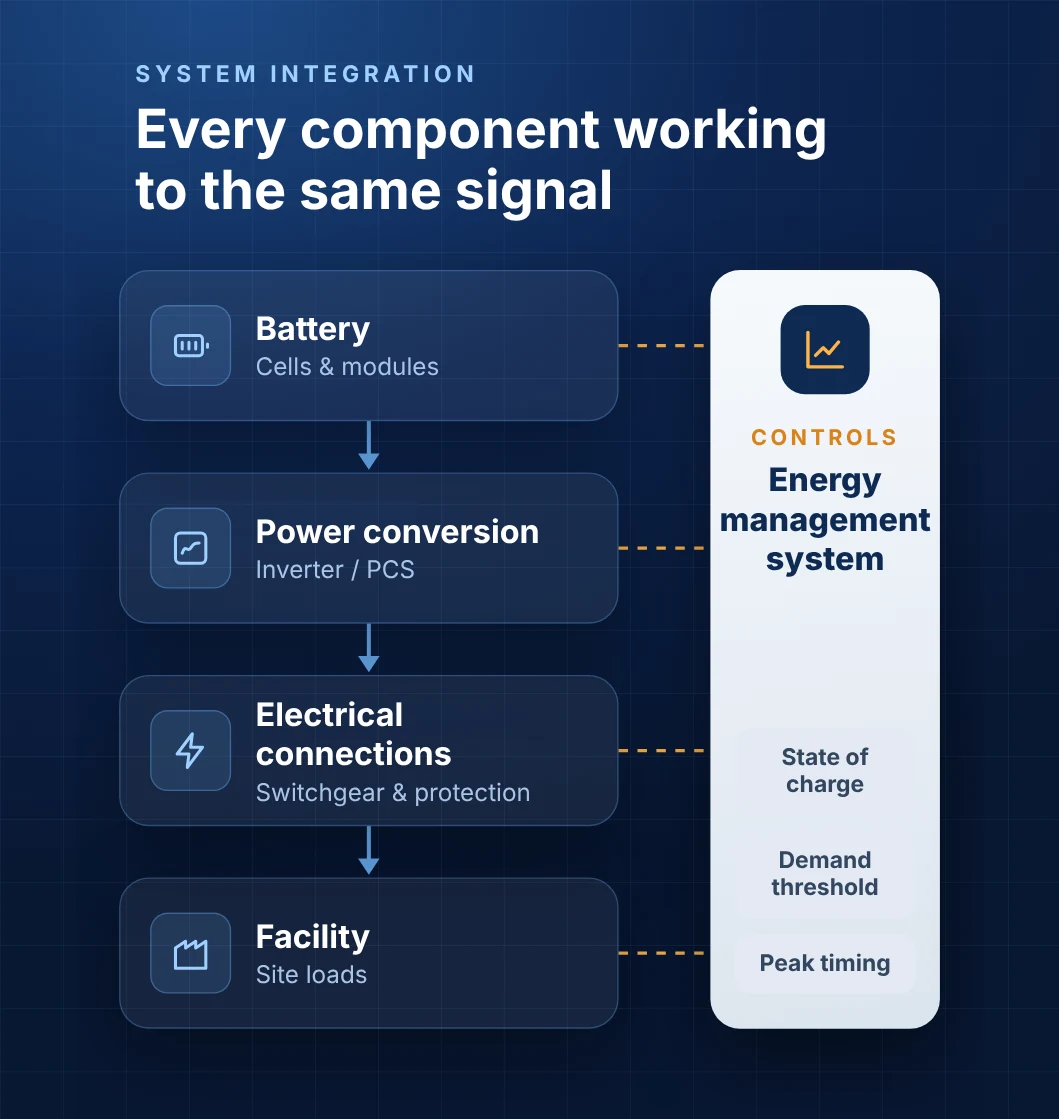
Battery performance relies on the cells, but also on how the system is integrated, including:
Each component needs to work together to be able to react to changing demand. Energy management controls also need to account for the battery’s state of charge, charging availability, and expected timing of peak demands. Careful system design and integration are, therefore, key to ensuring battery capacity and power output are compatible with the needs of the intended application.
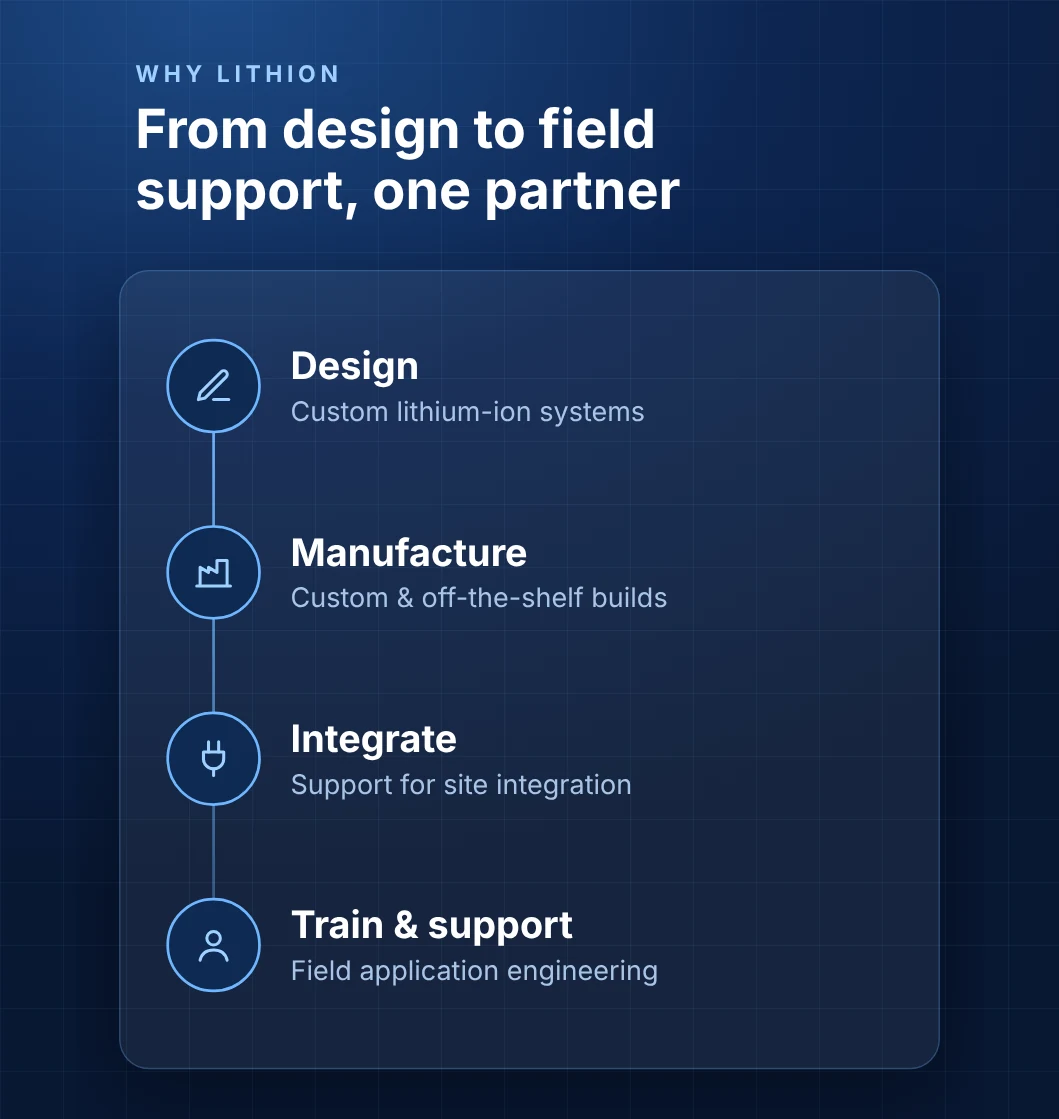
Lithion designs and manufactures custom lithium-ion battery systems, alongside off-the-shelf options for industrial, commercial, and specialty applications.
For OEMs and organizations evaluating the right battery storage options and operating practices, understanding how power demand and energy capacity work is essential. We can combine design and production with integration support, training, and field application engineering to develop reliable battery solutions tailored to the relevant application.
As more businesses look at managing peak demand periods while moving forward with electrification projects, we’re here to assist with selecting or developing an appropriately engineered system to support flexible, efficient energy management.