

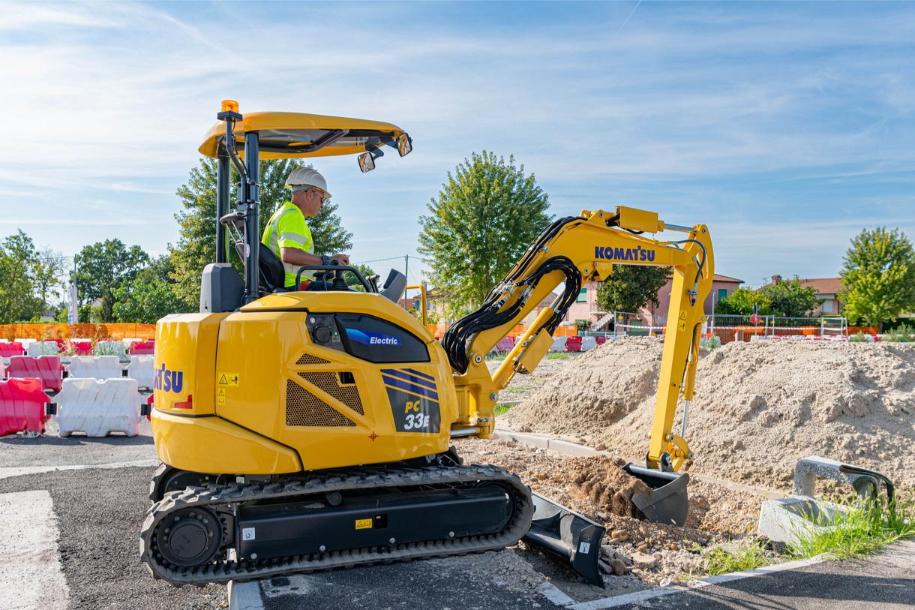
For OEMs developing electric industrial equipment, selecting the right battery system involves balancing technical requirements, development costs, integration complexity and time to market.
Off-the-shelf lithium battery packs can provide a practical solution where an existing product meets the application's energy, power, voltage and installation requirements. Using an established battery platform can reduce the need for new battery development and provide a more straightforward route towards production.
However, not every application can be accommodated by an existing battery design. Specific electrical, mechanical or environmental requirements may call for modifications to a standard platform or a fully custom-engineered battery system.
The decision is therefore not simply whether a custom battery can be developed, but whether the application's requirements can be met by an existing battery platform and whether additional engineering is technically or commercially justified.
This article explores when off-the-shelf lithium battery packs make sense, what OEMs should consider during selection and when an adapted or custom battery may be more appropriate.
Off-the-shelf (OTS) lithium battery packs are established battery products with defined electrical, mechanical and operating specifications.
Unlike a fully custom battery developed around a particular application, an OTS battery uses an existing design that can be selected and integrated into suitable equipment.
These products may be supplied as complete battery packs or as part of a modular battery platform, depending on the manufacturer's architecture.
For OEMs, the main advantage is the ability to use an established product without developing a new battery system from the ground up.
Potential benefits include:
These advantages depend on the battery's suitability for the application and do not eliminate the need for equipment-level integration and validation.
OEMs do not necessarily need to choose between an entirely standard battery and a completely new custom design.
Depending on the application, there are three possible approaches.
Where an existing battery meets the application's energy, power, voltage, mechanical and environmental requirements, it may offer the most practical route to electrification.
Using an established product can reduce the need for new battery development and may provide advantages in manufacturing readiness and long-term supply planning.
However, the OEM must still verify compatibility with the equipment's electrical architecture, charging system and operating conditions.
Some applications may be supported through modifications to an existing battery design.
Depending on the product architecture, these could include approved changes to mounting arrangements, external interfaces or communication settings.
This approach may help meet application-specific requirements without developing an entirely new battery system.
However, modifications can introduce additional engineering, testing or certification requirements and should be assessed accordingly.
A fully custom battery may be appropriate where existing products cannot meet essential technical requirements or where a dedicated design provides a justified commercial advantage.
Custom development can offer greater flexibility over packaging, electrical architecture, thermal management, control systems and integration.
The trade-off is typically additional engineering investment, development time, validation and manufacturing preparation.
An OTS battery is most suitable when an established product can meet the equipment's technical and operational requirements without substantial battery redesign.
Several factors influence this decision.
Battery selection should begin with an understanding of the equipment's duty cycle.
Energy capacity, measured in kilowatt-hours (kWh), determines the amount of energy available to support operation, while power, measured in kilowatts (kW), describes the rate at which energy can be delivered.
OEMs must consider both continuous and peak power demands, including the duration and frequency of high-power operation.
An OTS battery may be suitable where its usable energy and power capabilities meet these requirements within the manufacturer's operating limits.
The battery's operating voltage range must be compatible with the equipment's electrical architecture, including motors, inverters, auxiliary systems and charging equipment.
Electrical protection, communication interfaces and charging requirements must also be considered.
A standard battery can be appropriate where these requirements can be met through its existing interfaces and supported configurations.
Battery dimensions, mounting arrangements, weight distribution and service access are important considerations.
An OTS battery may be suitable where the equipment can accommodate the existing pack dimensions without substantial mechanical modifications.
Where installation space is restricted or the battery must conform to an unusual shape, an adapted or custom solution may be more appropriate.
Industrial equipment may operate in environments involving vibration, shock, dust, moisture and temperature extremes.
An OTS battery can be appropriate where its environmental specifications and validated operating limits meet the application's requirements.
Where additional protection or different thermal management is necessary, OEMs may need to consider an adapted or custom design.
Using an established battery platform may reduce the amount of new product engineering required.
This can be particularly attractive for OEMs seeking to limit non-recurring engineering costs or accelerate their equipment development programmes.
However, integration, testing and applicable compliance requirements must still be addressed.
One potential advantage of standard battery platforms is the ability to use the same battery product across different equipment models.
For example, an OEM manufacturing several types of industrial machinery may have applications with similar voltage and integration requirements but different energy demands.
Where the battery architecture supports it, approved modular configurations or different capacities within the same product family may allow the manufacturer to use a common platform across multiple applications.
This can offer potential advantages in:
However, commonality should not come at the expense of application suitability.
Different power demands, voltage requirements or installation constraints may mean that separate battery products are required.
Custom battery development becomes relevant when an existing product cannot adequately satisfy the application's requirements or when a dedicated design offers a clear commercial advantage.
Potential reasons include:
Custom development should not be viewed as automatically preferable.
For many OEMs, the additional engineering and validation investment may outweigh the benefits where a suitable standard battery already exists.
The commercial case for an OTS battery extends beyond its initial purchase price.
OEMs should consider the total cost of developing, integrating, manufacturing and supporting the battery system over the equipment's expected production and service life.
For lower-volume applications, an established OTS battery can provide an attractive balance between cost, performance and development time.
For higher-volume programmes, custom engineering may become commercially justified where application-specific optimisation delivers meaningful benefits over the programme lifetime.
However, production volume alone does not determine the most appropriate solution.
Even when an OEM selects an off-the-shelf battery, successful integration requires more than matching voltage and energy capacity.
The battery must operate as part of the wider equipment system, including the powertrain, charging equipment, control architecture and safety functions.
The Battery Management System (BMS) plays an important role in monitoring battery operation, managing protection functions and communicating relevant information to the equipment.
Charging compatibility, electrical protection, thermal management and environmental requirements must also be considered.
Addressing these requirements early can help OEMs identify integration challenges, reduce development risk and establish a clearer path towards production.
Lithion Solutions supports OEMs with established lithium battery platforms and custom-engineered battery systems.
Our approach starts with understanding the application, including energy consumption, peak power requirements, voltage, installation space, charging strategy and environmental conditions.
Where an existing battery meets these requirements, it can help reduce development time, engineering cost and integration complexity.
For applications requiring additional flexibility, Lithion can assess whether an adapted standard platform or fully custom battery system is the more appropriate solution.
Our capabilities include battery system engineering, in-house BMS technology, high-voltage system expertise and application engineering support.
Combined with US manufacturing capabilities and engineering support across Europe and North America, Lithion can support OEM programmes from initial battery selection through integration, validation and serial production.
The right battery solution starts with your application.
Contact Lithion to discuss your industrial battery requirements and explore whether an off-the-shelf, adapted or custom battery solution is the most appropriate fit.
